


Join us for a round at Durham City Golf Club
Standing on the first tee with the tree-lined fairways below you, and playing alongside the River Browney on the front nine, it’s hard to believe Durham City Golf Club is so close to the heart of a city and lies on the edge of a busy industrial area.
The traditional English parkland layout is incredibly well-defended by its natural slopes – particularly on the front nine – as well as many deep bunkers and several strikingly contoured greens.
The club was inaugurated at the County Hotel on December 3, 1887, and the first six-hole course at Pinkerknowle opened the following year. In 1927, the club announced plans to move to Mount Oswald. Following a successful period there, in 1974 the club relocated to farmland at Littleburn on the outskirts of the city, with the course opening that November. Since then, it has continued to develop and grow into the 6,319-yard layout which we find here today.
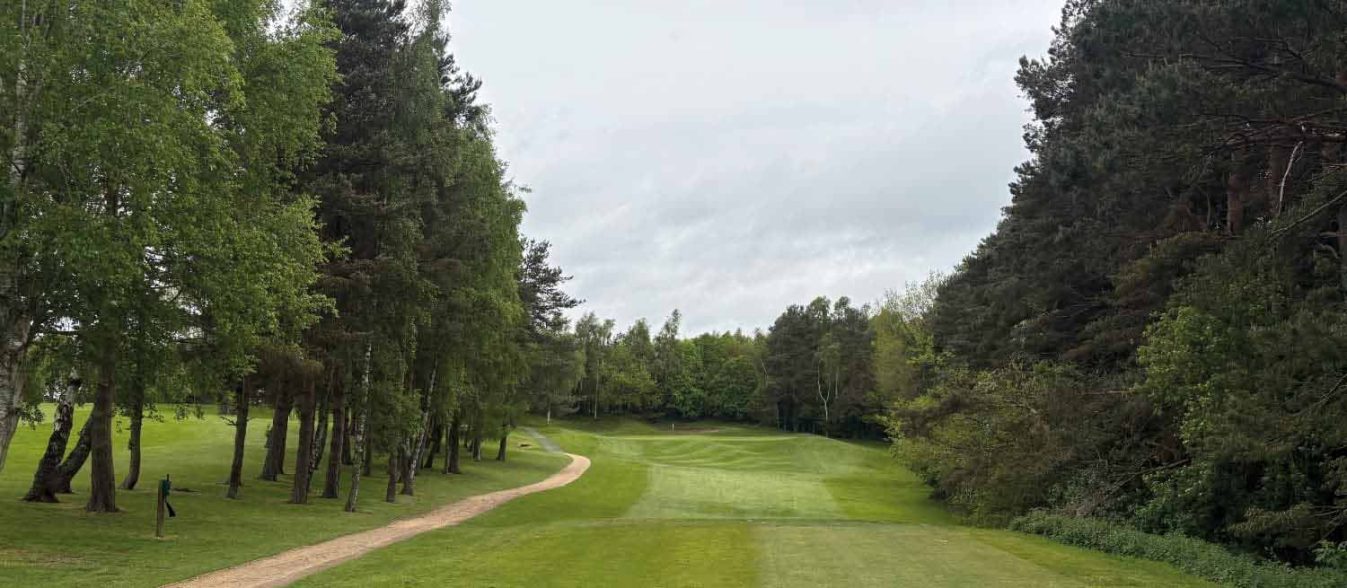
The opening hole – a 560-yard par five played from an elevated tee in front of the clubhouse – offers an opportunity to get off to a fast start. The fairway runs downhill to the green and is generous, though bordered by trees. Depending how far you run down the hill, you can take aim at the green in two or lay up short of the bunkers to leave a simple pitch.
The second is a far more difficult test. Measuring just 159 yards from the back tee, this par three is played steeply uphill to a heavily contoured green which slopes from back to front and is flanked by a tree which overhangs its front left corner and a pair of bunkers on the right side. Finding the correct tier of the green is essential as it is very tough to navigate between the two levels.
One of the toughest tee shots on the course follows at the 416-yard third hole. Stay well clear of the out of bounds and river to the right while avoiding the trees left of the fairway. The hole sweeps from right to left around the trees with a pair of bunkers on the inside of the dogleg, and the long green is framed by trees and flanked by a trio of deep bunkers.
Things don’t get much easier at the fourth – another par four measuring just over 400 yards with out of bounds right. Finding the fairway, which moves subtly from right to left, is key if you want an unobstructed view of the long, distinctly two-tiered green, which is protected by a long bunker on its left front corner and another trap front right.
The fifth is a tricky 162-yard par three played downhill to a back to front sloping green with trees and a deep bunker protecting its left side.
The tricky 422-yard sixth follows and you must drive it well to avoid the three fairway bunkers left and the river right. The elevated green is equally well-defended as the steep rise at the front edge has a cavernous bunker cut into it.
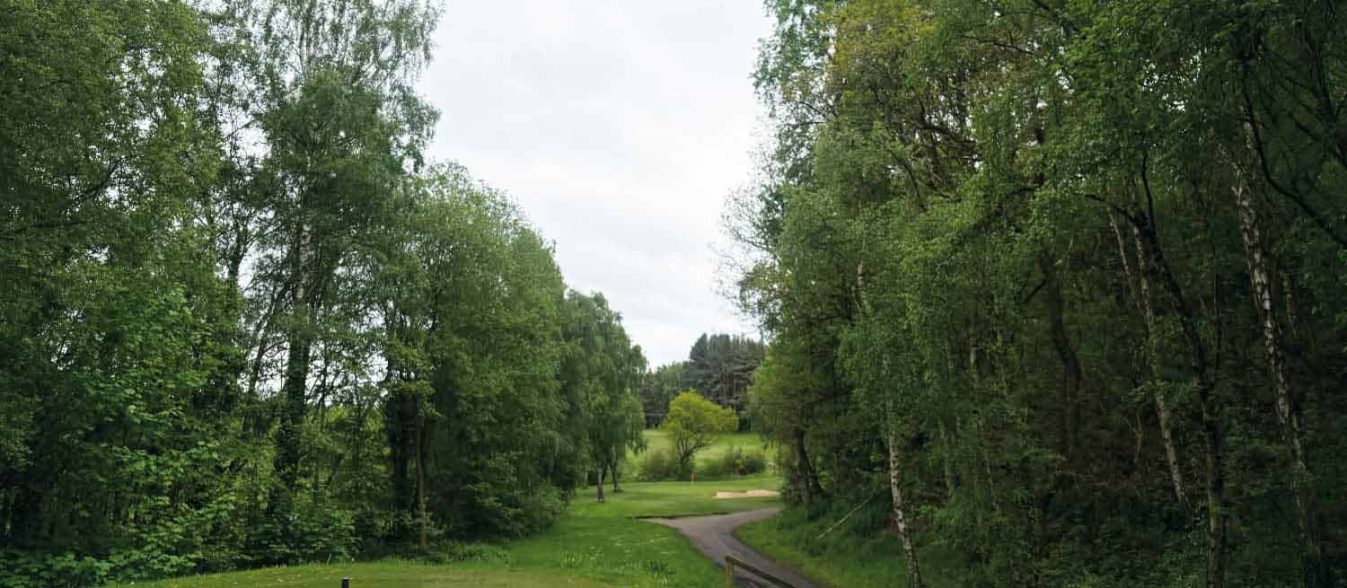
The stunning par three seventh has an elevated tee set among the trees which looks down at the green just 138 yards away. The green is well-defended with a large bunker and steep slope on the right side, and a slope feeding balls towards the trees on the left.
Favour the right side with your tee shot at the slightly downhill, 384-yard eighth hole as the fairway slopes from right to left with thick rough and bushes waiting to catch balls which bound down the hill. The slope continues all the way to the very large green, which has just one bunker guarding it some 30 yards short on the right side.
Played back up the hill, the ninth is just three yards longer than the eighth but plays much longer. A solid tee shot up the slope is essential to leave as short an approach as possible to another large green which is distinctly contoured, generally slopes from back right to front left, and is protected by a shallow bunker left and a steep drop on the right.
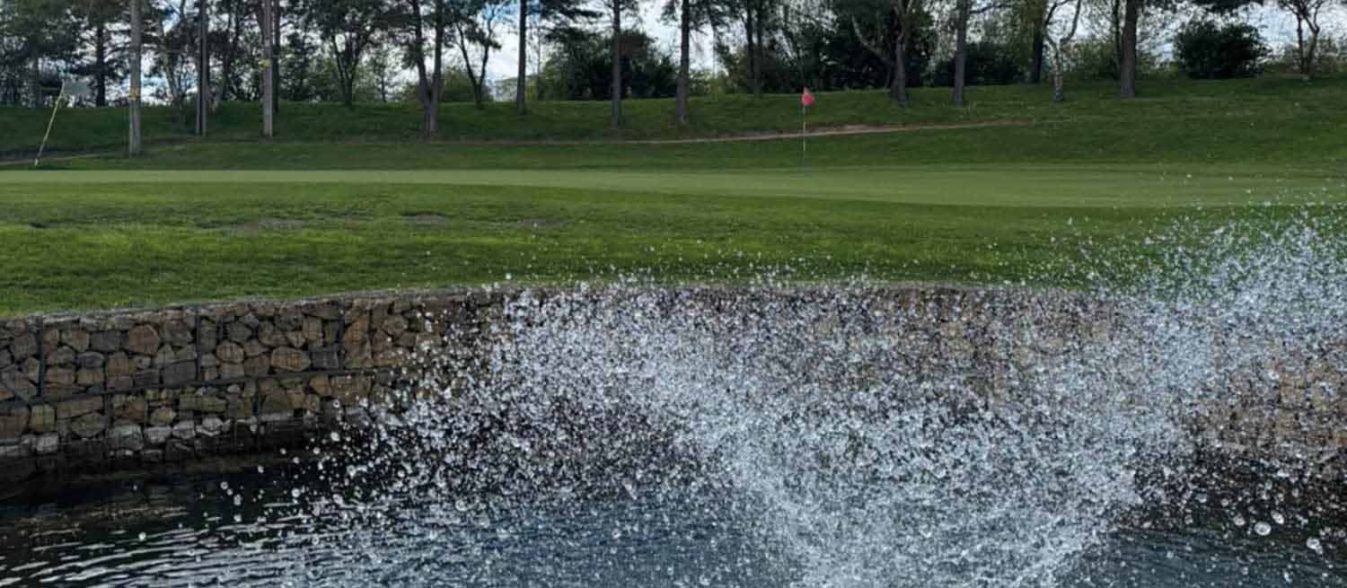
Wrapped around the practice ground, which is out of bounds, the 337-yard par four 10th turns sharply from right to left around tall trees and requires an accurate tee shot to the corner. From here you’ll have a good view of another long green which has a steep slope in the centre and sits beyond an elevated bunker on the front right corner. A large pond looms on the left side – do not go near this under any circumstances as the contours gather balls towards the water.
Having crossed the driveway, the 521-yard par five 11th invites you to hit driver with a generous fairway flanked by trees. The enormous green, which is set at the top of a steep rise, lies beyond a narrow ditch at the foot of the hill, and is easiest to approach with a wedge or short-iron from the fairway.
At the 315-yard 12th, the fairway narrows as you get closer to the green, and sand left and right waits to catch those who approach from wide angles.
The 397-yard 13th sweeps from right to left with the boundary fence on the left side. There is room to hit driver, but you must turn it around the corner to hold the fairway. Approaching from the right side is tough with two bunkers between your ball and the flag, while another heavily contoured green slopes from back to front.
The sub-500-yard par five 14th follows and the double dogleg fairway must be navigated accurately to get a good view of the green. The heavily contoured approach slopes from right to left, with the green sloping the opposite way. The large bunker short right must be avoided at all costs.
The final par three is the most difficult of the set. Measuring 182 yards from the back tee, the approach to the green is steeply contoured and a solid mid- or long-iron is required to make the carry to the putting surface. A solitary bunker sits beyond and above the green, while the many slopes in the putting surface make long putts here very tough to get right.
The closing stretch is as unique as it is demanding.
The 369-yard 16th requires less than driver to the corner of the dogleg, while you must avoid the large catchment area right and below the fairway. When hitting into the green, play sensibly away from the trio of bunkers on the right side.
At the dogleg left, 335-yard 17th, while the green may be within reach, play accurately down the hill between the tall trees to leave an unobstructed wedge shot slightly back up the slope. One of the smaller greens on the course is protected by a long bunker left and drop off on the right side.
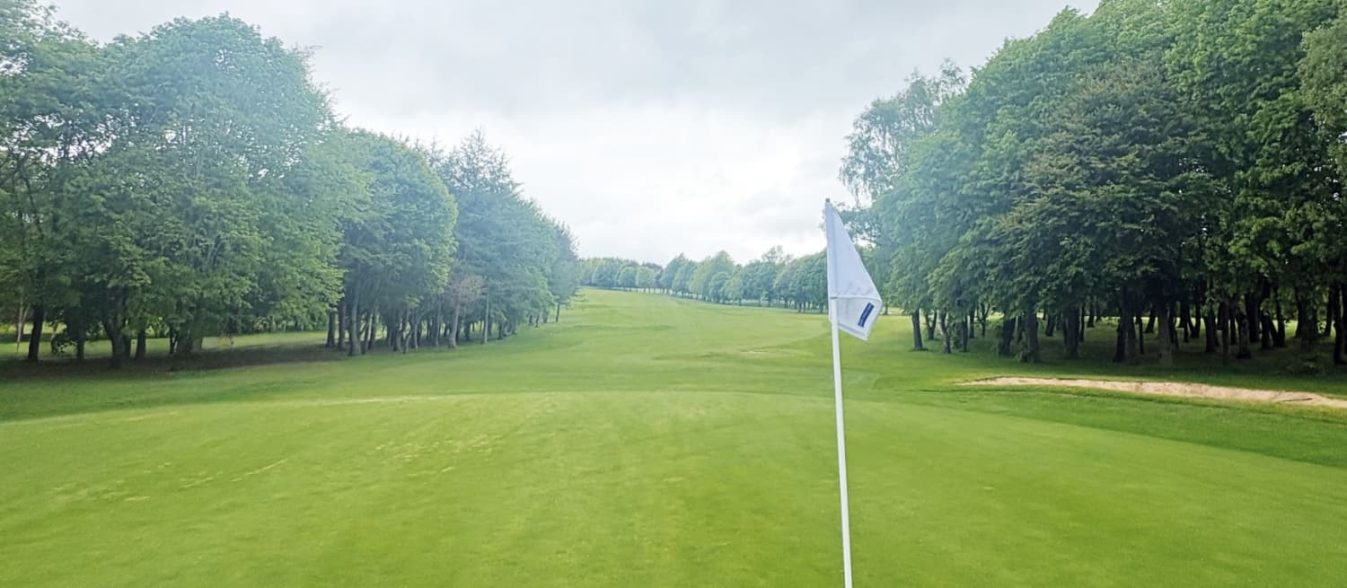
The most straightforward of the closing trio, the 18th measures 338 yards from the back tee and just 274 yards from the yellow tee. Played uphill, the fairway is generous with a slope on the right side to feed balls back towards the middle. The green is narrow at the front and wider at the back with bunkers front left and back right.
OUR VERDICT
A test of accuracy off the tee, with many fascinating green complexes, a visit to Durham City should be high on your priority list.

