

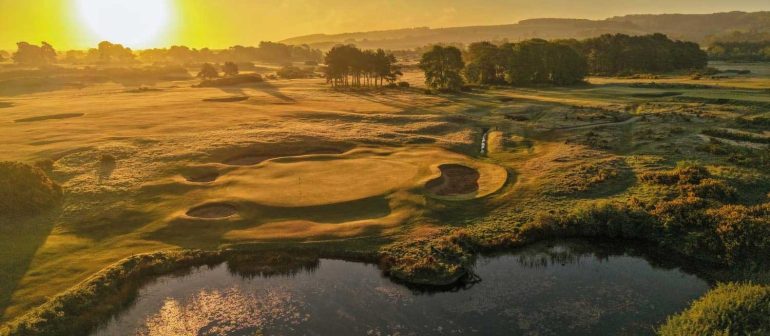
Once again, springtime proved unpredictable and less than ideal for golf courses, but brighter days are ahead writes Ganton course manager Simon Olver
When I started out as a greenkeeper, you could just about set your watch using the weather patterns and plan the changing of the seasons in your diary, but in recent years our weather has become more unpredictable, more extreme, and more difficult to work around.
This spring we once again faced low temperatures, particularly overnight with morning frosts continuing into April and May. These cold starts slow growth as the plants and soil take time to warm up in the sun. Slow growth means it takes longer to recover from winter wear, and this delays us presenting the golf course in peak condition.
On the back of a drought in 2025, and despite some periods of intense rainfall, we have also had a dry spring, and the moisture deficit is greater as we move into summer than it was last year.
These conditions can cause several short- and long-term challenges. With limited recovery, the sward is not where we’d like it to be heading into the high-stress period with summer heat and playing levels. We’re also seeing different growth rates (differential growth) as all grass species react differently to conditions. For example, the broader leaf plants are able to take in more sunlight and get going faster than the fine leaf grasses we want to encourage. This leads to a mottled appearance on the greens, and makes it difficult to get smoothness and trueness to where we want them to be at this stage in the golf calendar.
Furthermore, topdressing with sand is essential to smoothness and you will have seen this has taken longer to get into the surface this spring as the growth rate has been so low. You may have also seen a lot more refinement with brushing and verti-cutting as teams look to minimise lateral growth and boost smoothness as much as possible. There may have also been an increase in fertiliser inputs as greenkeepers try to boost growth, but each plant reacts slightly differently to this and finding consistency day-to-day will be difficult until we reach the point where we have everything moving at a similar rate. As I write, we’re also seeing the annual meadowgrass begin to seed and while this happens surface consistency is impacted – particularly on traditional inland green constructions. This period is short though, and once it’s over things settle down.
Looking ahead, plants are already under stress and there is more to come as we move into summer.
Ultimately, growth potential is governed by temperature and influenced by other key factors such as sunlight and moisture. While we have some ways to control this, we are at the mercy of the weather for the most part.

While the spring has not been ideal, the overnight temperatures are improving and by the time you read this they should be at summer levels. With more growth comes more opportunities to refine surfaces and while it is disappointing how long it has taken to reach this point, the summer is now ahead of us.
These challenges are the same right across the UK. Climate change is affecting sports turf across the board, with the swings in temperature and moisture levels impacting our ability to present a consistent, healthy playing surface.
Please try to have a little bit of patience as things come good later than we’d all like. While the calendar says it’s the golf season, the weather is roughly a month behind here at Ganton. We’ve all got our fingers crossed for a little more consistent rain so we don’t fall into a drought like last year, and here’s hoping better days are ahead.

