




Danny Lockwood pays a visit to Scarborough North Cliff Golf Club
Some of golf’s biggest names have graced the fairways of Scarborough North Cliff Golf Club over the years – including Padraig Harrington, Lee Westwood and David Duval, who all took part in qualifying for the 1991 Amateur Championship here.
On that occasion, North Cliff was partnering inland neighbour Ganton, which started life exactly 100 years earlier as The Scarborough Golf Club.
Indeed, names can get confusing around here. South Cliff was called Scarborough Town Golf Club when it was founded in 1902 – before The North Side Golf Club came into being seven years later, with input from design maestro Harry Colt.
The club and course, which started as a modest six-hole track on what is now the site of the Scarborough Open Air Theatre, benefitted from the skills of five-time Open champion James Braid when it moved to its current location and then opened in 1928.
Even before that, North Cliff was part of one of the country’s most historic and popular annual festivals – the Scarborough Golf Week. Started in 1921, today the North and South clubs partner with Filey and Whitby to offer a range of men’s and women’s competitions as part of 72-hole nett and gross championships, plus team and fourball betterball competitions, to offer something for everyone each September.
North Cliff’s most successful product to-date is perhaps Clive Clark – who tied the great Gary Player for third place in the 1967 Open Championship at Hoylake, finishing behind Jack Nicklaus and winner Roberto De Vicenzo. Clive also made an ace at Augusta National’s 16th hole, and finished third in the PGA Order of Merit before becoming head professional at Sunningdale.
More recently, Iain Pyman won The Amateur at Royal Portrush and picked up the Silver Medal at Royal St George’s in 1993 before turning professional. His career spanned both the European and Challenge tours, and he still holds the record for the most wins on the Challenge/HotelPlanner Tour with eight victories from 1999-2008.
Today, nurturing talented players remains a big part of what North Cliff is about with a thriving – and successful – junior section of 63 youngsters at the time of writing thanks to a concerted push by a dedicated team of volunteers and club professional Andrew Wells. Getting people into golf is a key part of the club’s philosophy – with an apprenticeship scheme for golfers who haven’t been members anywhere for at least three years, plus an academy introductory project which Andrew describes as a pathway to membership that includes two years of coaching sessions. It currently has 11 female recruits.
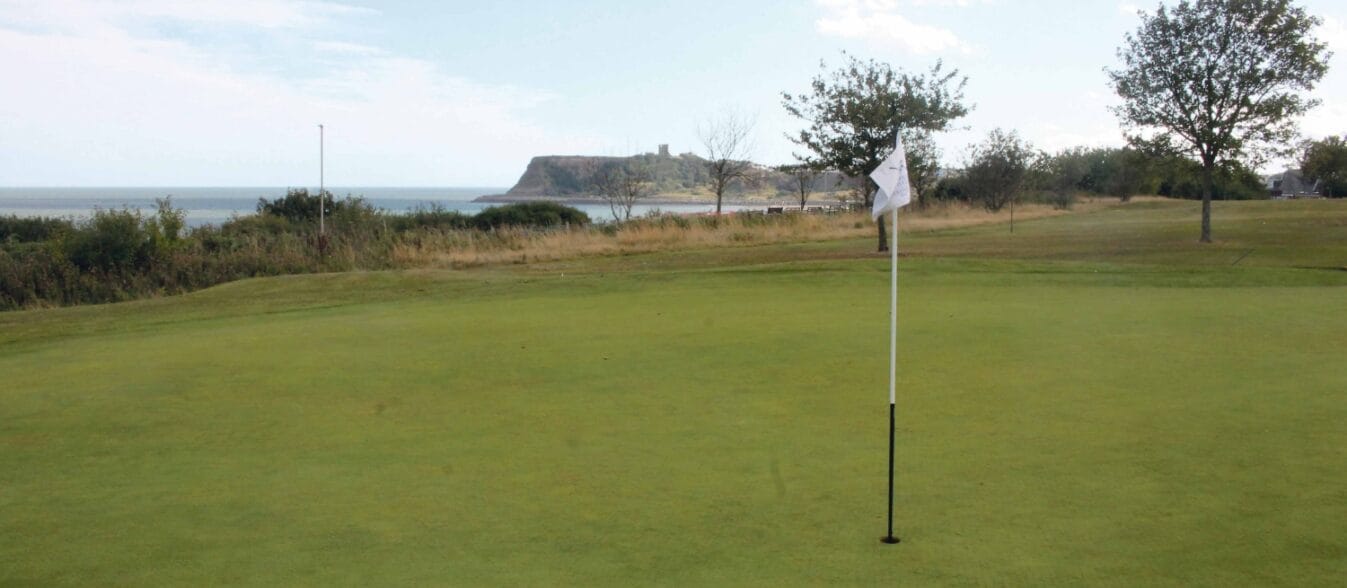
The North Cliff clubhouse is a popular destination for many non-golfing locals, and the stunning clifftop patio views across the bay to the historic castle go a long way to explaining why.
General manager Joanne Duck explained that the club welcomes societies on a Saturday – not the most common practice. “Our tradition here is for club competitions to take place on a Sunday, so we welcome visiting groups on Saturdays with a price structure dependent on numbers,” she said.
On the course, after departing the first tee with its views of the North Sea, golfers play two holes before crossing Burniston Road and entering the heart of an undulating, tree-lined parkland challenge. The course is unusual in that all three par fives are on the front nine – presenting a challenging layout which has a par of 38 going out and just 34 on the way back in. Players cross back onto the clubhouse side to play the final three holes – before they have a chance to enjoy the sun-kissed patio and take in the stunning views one more time.
SCARBOROUGH NORTH CLIFF GOLF CLUB (YELLOW TEES)
1 – 269 YARDS, PAR 4
The opening hole used to be a long par three but today it is a dogleg par four with trouble down the right side. It is played gently uphill with a short right bunker and distinct fairway mounding. A lot of bunkering protects the hole from big hitters who may fancy taking aim at the subtly breaking green with trouble tight to the back edge.
2 – 430 YARDS, PAR 4
A long hole which stretches to 468 yards from the back tee, the second is tough – particularly when played into the prevailing wind. The hole turns gently from left to right with a thick stand of trees down the right side. Front bunkers protect a mounded, gently undulating green.
3 – 304 YARDS, PAR 4
Playing uphill with a slight left to right shape, longer players must beware a cross bunker over the ridge at the third. The downhill approach is played to a green with two front left bunkers and a single right trap, and a runoff area at the back.
4 – 328 YARDS, PAR 4
Played from an elevated tee to a broad fairway, players must avoid the fairway bunkers and a small pond to the left of the fourth hole before playing into a flattish green with traps either side.
5 – 479 YARDS, PAR 5
A straightaway par five played over a low swale with a ditch, avoid the trees right and fairway bunkers left from the tee at the fifth. The shot into the green is played slightly downhill to a long, well-bunkered green with some distinct slopes.
6 – 412 YARDS, PAR 4
A long drive between the trees at the sixth hole is required to ease the challenge of the uphill second shot. There are bunkers short left and right of the putting surface, and on its front corners, while the green slopes a touch from back to front. Losing your approach right is disastrous here.
7 – 141 YARDS, PAR 3
An uphill par three with bunkers set well below an elevated green that slopes from back left to front right, the seventh can be tricky. A steep runoff on the right side and a mounded bunker set above the left side will challenge those who miss this green.
8 – 481 YARDS, PAR 5
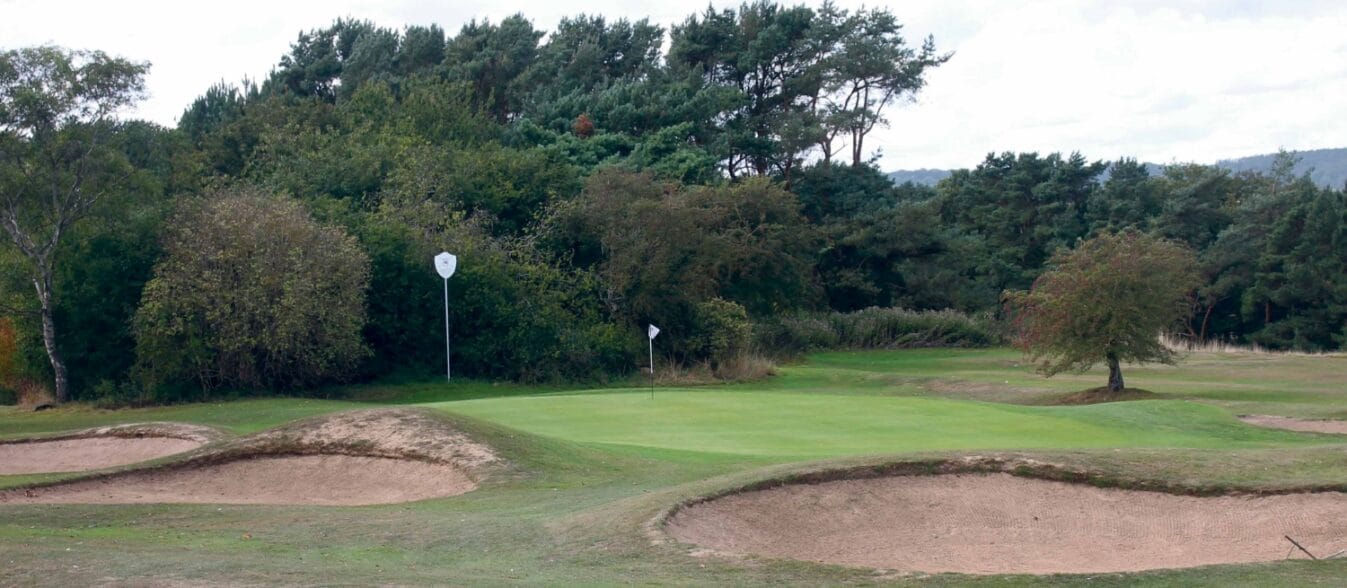
The downhill tee shot at the par five eighth invites you to open your shoulders – just make sure you avoid the fairway bunker. The green sits above you as you play into it, and is nestled in the trees with a bunker front right and a larger trap front left.
9 – 496 YARDS, PAR 5
The second of the back-to-back par fives, the ninth begins with a daunting drive from a raised tee which is played over a ravine and ditch before climbing to a fairway which slopes from right to left – bringing the small pond and left fairway bunkers into play. An angled bunker is set some 40 yards short of a well-guarded green which slopes from back right to front left.
10 – 369 YARDS, PAR 4
A straight, downhill par four, the 10th presents a narrow target. The green has a tight entrance and tricky runoffs on three sides.
11 – 147 YARDS, PAR 3
The signature par three at North Cliff, the 11th is played from an elevated tee – which gives you a great look at a back to front sloping green defended by a ditch, bunkers and trees.
12 – 354 YARDS, PAR 4
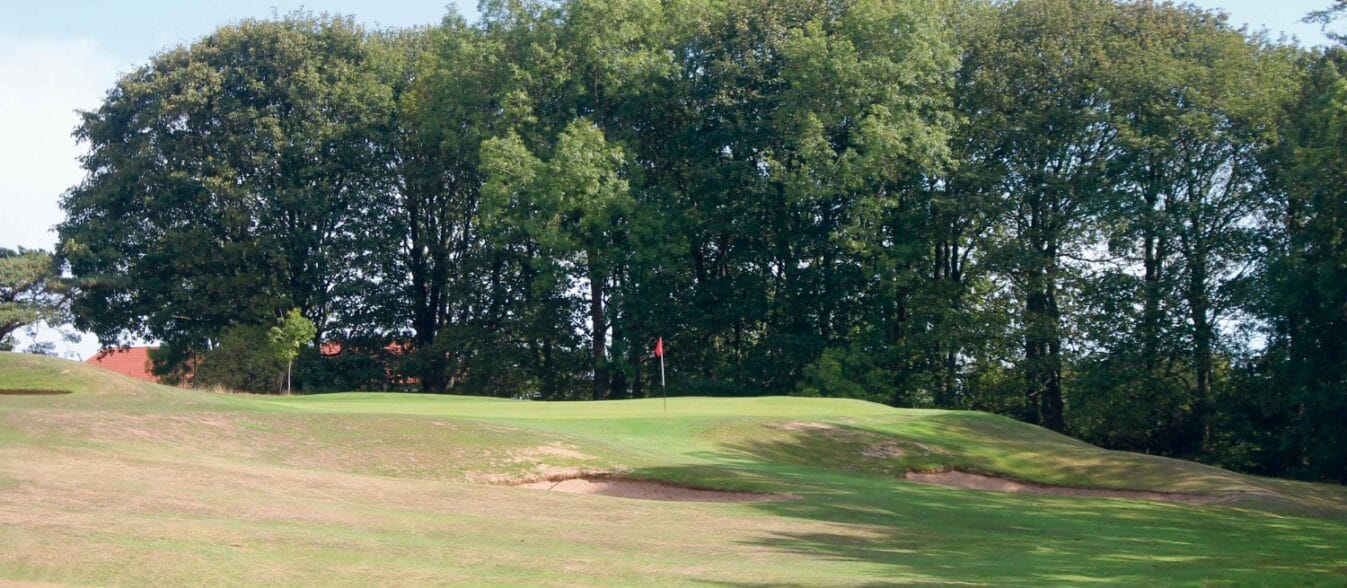
The tee shot at the 12th is played steeply uphill to a plateau before the hole turns to the right – with a gentler rise to a green featuring a false front, a front right bunker and rear runoffs.
13 – 306 YARDS, PAR 4
The elevated tee at the 13th gives you a look at the narrower, tree-lined landing area. Played downhill and slightly right to left, the fairway bunker is in reach for big hitters. When playing downhill into the tricky green, stay away from the large front left bunker.
14 – 312 YARDS, PAR 4
A straightaway short par four, the 14th presents a good birdie chance when played accurately.
15 – 183 YARDS, PAR 3
A longer par three played downhill, the kidney-shaped target at the 15th has a pair of traps on either side.
16 – 371 YARDS, PAR 4
Having crossed back over the road, the final stretch begins with a tricky par four that demands an accurate approach to a relatively flat green.
17 – 347 YARDS, PAR 4
The par four 17th, which turns slightly to the right, presents a wide target from the tee. The front traps narrow the front of the green and protect this gently undulating, smaller putting surface with a runoff back left.
18 – 376 YARDS, PAR 4
Played back to the clubhouse, the tricky par four 18th features a fairway bunker on its left side to catch out those who shy away from the out of bounds to the right. There’s a slight crest just before you reach a flatter green with bunkers on both sides.

