

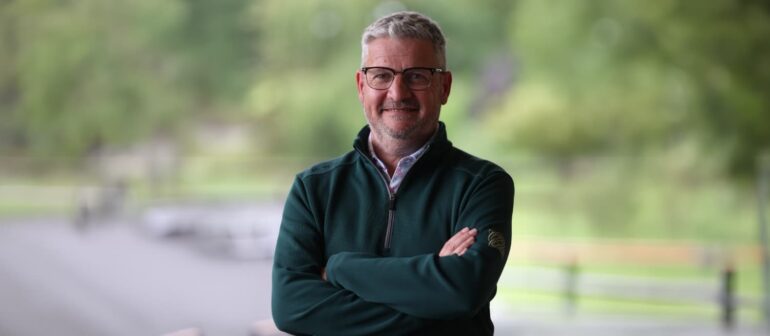
A new charity has been created to harness the power of the game of golf to improve the lives of people who have experienced a stroke.
Founded by Andrew Biggs and Mark Eadle, Stroke Play Golf aims to create opportunities for people to reconnect with others, rebuild their confidence, improve their wellbeing, and discover that they are not facing recovery alone.
Successful businessman and passionate golfer Andrew suffered a stroke earlier this year. Like many stroke survivors, he realised that while the medical treatment and rehabilitation available immediately after a stroke are excellent, the longer-term support can often be limited.
Meanwhile, Mark has spent more than 40 years working in professional sport and the golf industry. Throughout his career he has seen the extraordinary power sport has to improve physical and mental wellbeing. His own father suffered a stroke, and over the years Mark has spoken with many people whose lives have been changed forever by one. He has repeatedly heard the same message – that once the initial rehabilitation ends, many people feel isolated and unsupported.
“Mark and I have spent many hours playing golf together over the last few months,” said Andrew. “Those rounds led to conversations about recovery, confidence, the challenges of everyday life and, above all, the lack of opportunities for stroke survivors simply to spend time with people who truly understand what they are experiencing.
“Those conversations led to one simple question – why isn’t there something like this already?”
It is estimated that one in four people will be affected by stroke during their lifetime, either personally or through somebody close to them. Unlike a broken bone, many of the effects cannot be seen. Fatigue, reduced concentration, memory problems, anxiety, frustration and loss of confidence can all become part of everyday life despite outwardly appearing well.
“Golf offers something unique to stroke survivors,” added Andrew. “It encourages gentle physical activity, spending time in the fresh air outdoors, and – perhaps even more importantly – it creates conversation. A round of golf gives people four hours to talk naturally, without pressure. It gives people time to share experiences, discuss frustrations, celebrate progress and support one another. For someone recovering from a stroke, that conversation can be every bit as valuable as the exercise itself.”
Returning to golf after a stroke is not always straightforward. Walking 18 holes may not be possible, particularly during the early stages of recovery. Golf buggies are often essential rather than a luxury, but they add significantly to the cost of playing. Green fees, buggy hire and equipment can all be barriers that prevent people returning to the sport. Stroke Play Golf is aiming to remove as many of those barriers as possible by working with golf clubs, sponsors and supporters to make golf affordable, accessible and welcoming for everyone.
Andrew and Mark are aiming to build a schedule of regular monthly golf gatherings in a relaxed, friendly environment. The first event is set to take place at The Longhirst Club on September 30. For more information on events coming up email andrew@strokeplaygolf.org

