

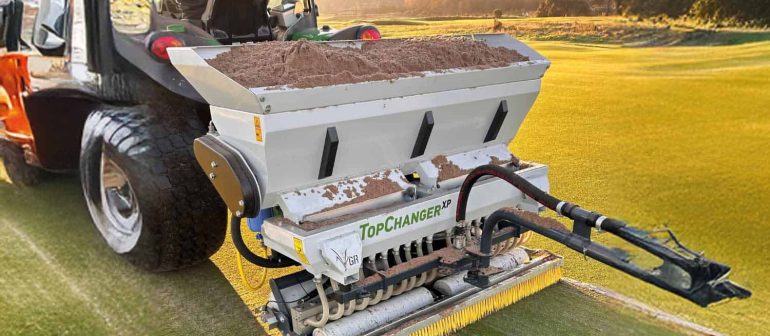
As we move into the start of the playing season, you may see maintenance being carried out on the golf course, here’s why with Ganton course manager Simon Olver
It’s great to have seen a little more sunshine, and to be counting down the days to The Masters as I write.
While we’re all itching to get back to summer playing conditions, the springtime is a really important part of year for turf. Though it will be few golfers’ favourite subject, greens maintenance is vital to delivering long-term health and performance.
No golfer or greenkeeper likes to see greens with holes punched in them, deep verti-cut and scarification marks, and heavy top dressing applied. I can also assure you that no greenkeeper would do this invasive, time consuming and labour-intensive work if it wasn’t essential.
Greens maintenance is one of the key parts of a golf course’s cycle. The level of work carried out is affected by many things and there is a balance to strike between several competing factors.
In short, we do greens maintenance work to relieve the stresses and strains of golfers’ footsteps and greenkeeping traffic on fine turf areas and prepare them for busy, stressful seasons.
Our aim is to reset and reintroduce space in the subsurface so that roots can grow deep into the soil, becoming stronger. We also want air and water to move around the plants, and ensure we have an environment which promotes the growth of healthy plants which are ready to fight off diseases and can perform the way we want them to for golf.
It’s important to remember, fine grasses like stability and don’t like invasion, so we aim to establish the right environment then maintain it with as few invasive practices as possible.
The way we carry out this work has become more varied as new technology emerges and becomes more financially viable. While many still use hollow coring and tining, techniques such as the DryJect high pressure water injection system, Air2G2 compressed air injection, the VGR TopChanger, and Graden contour sand injection are becoming more common. While this equipment comes at a higher cost, using it reduces disruption.

As with any task on the course, greenkeepers are always looking ahead. While we fully understand now is the time we all want to be playing, this work is essential if you want to be playing on good greens.
In the ideal scenario for the turf and recovery speed, maintenance would be carried out at the peak of the growing season, when moisture levels and temperatures are optimal. In practice, a compromise must be struck between playing and agronomy, and few – if any – golf courses in our part of the world undergo maintenance in the optimal window in June and July.
Greenkeeping is not done on a calendar or in a textbook, and timing work has become more difficult as our climate changes. We study what’s happening in the ground and in the sky, and use our skill and knowledge alongside data to choose the best techniques annually.
Please try to remember, we really don’t like having to do invasive work on turf, but ultimately it’s essential if we want to play on good greens long-term.

