




Join us for a round at Hartlepool Golf Club
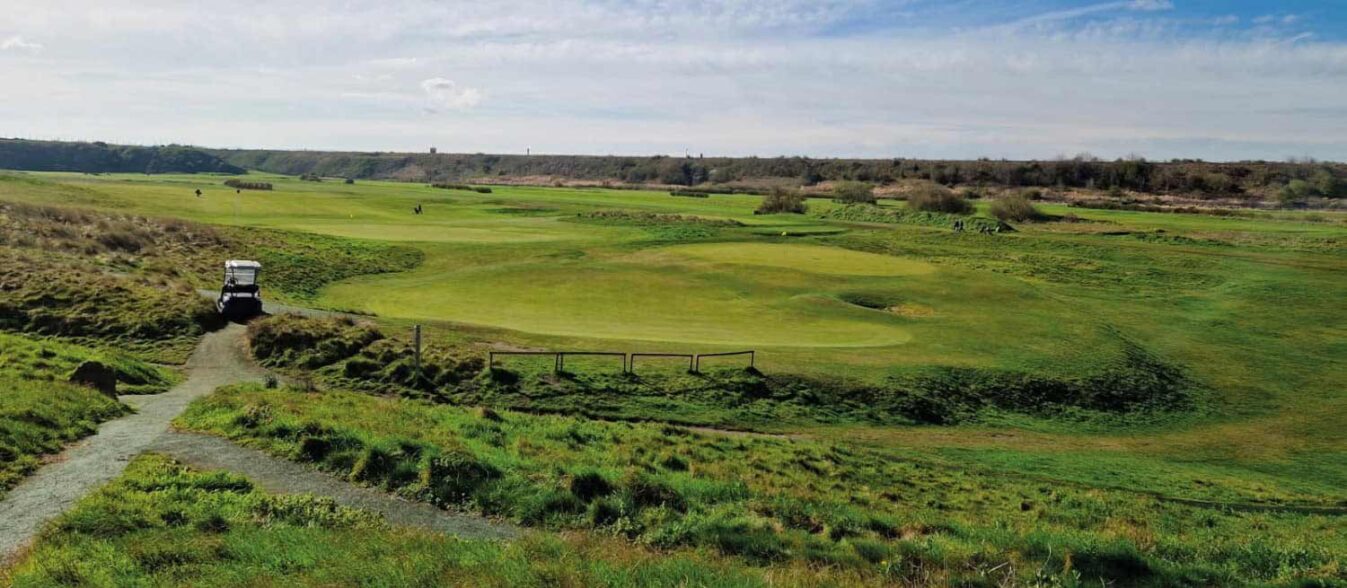
For more than 100 years, golfers have pitted their wits and playing ability against the linksland at Hartlepool Golf Club – and today the course remains a fine example of golf on the North East coast of England.
The club was established in 1906 and moved to its present location in 1907. In 1911, Willie Park Jr extended the layout to 18 holes, before James Braid reworked several holes in the autumn of 1929. Braid concentrated on the central holes – changing the ninth hole into a dogleg, pushing the 10th toward the dunes, lengthening the par three 11th and adjusting bunkering at the par three 12th. Several more changes have followed – including the renumbering of the holes following the construction of the clubhouse, and the creation of new first, 17th and 18th holes – though many elements of Braid’s work remains unaltered.
Today the layout measures 6,230 yards from the back tees and its championship credentials are regularly presented to players – notably over the opening two days of the 2024 English Amateur Championship.
The opening stretch offers opportunities to build your score. The par four first measures just 267 yards and can offer a birdie chance should you avoid the water and out of bounds left, and the trio of fairway bunkers en route to the small green which is narrowed considerably by a pair of bunkers.
Turning from right to left with a penalty area dividing its fairway, the 546-yard par five second hole demands accuracy with the boundary left again and several bunkers waiting to catch players out – including a large trap at the front left of the green and another a little further up on the right side.
The considerably tougher third, which measures 420 yards from the back tee, follows. Turning from left to right, players must find the correct section of a long green with a small front left bunker and a second, larger trap further up on the right side.
A solid approach is required at the par four fourth too – which is well-defended with a burn crossing in front of the green and three pot bunkers with large catchment areas guarding a putting surface which is considerably wider in its rear half.
The first of the holes along the shoreline follows at the 157-yard fifth. Play for the centre of the large green as it is well-defended by the boundary and a bunker left, plus two more traps on the right side.
Good strategy is required at the short par four sixth – where players are asked to play blind over the hill into the landing area to leave a short approach to a raised green which slopes from back to front with two deep bunkers right.
The 111-yard, downhill seventh is great fun in calm conditions and tricky to get right in the wind. Set beyond a steep ravine, the bunkerless green is cut into the dunes and is far wider than it is deep.
Measuring just under 450 yards, the eighth is among the toughest holes here. Played from an elevated tee with views of the whole course, the fairway bears right and players must choose their line carefully from the tee. Several hollows can catch out players, while the long approach must be accurate to find a heavily contoured greensite with six bunkers – including a formidable elevated trap on the right side.
Steer clear of the bunkers on the right side of the 373-yard ninth hole and you’ll be left with a relatively simple approach to a generous green with a pair of bunkers and some fantastic shaping on its flanks.
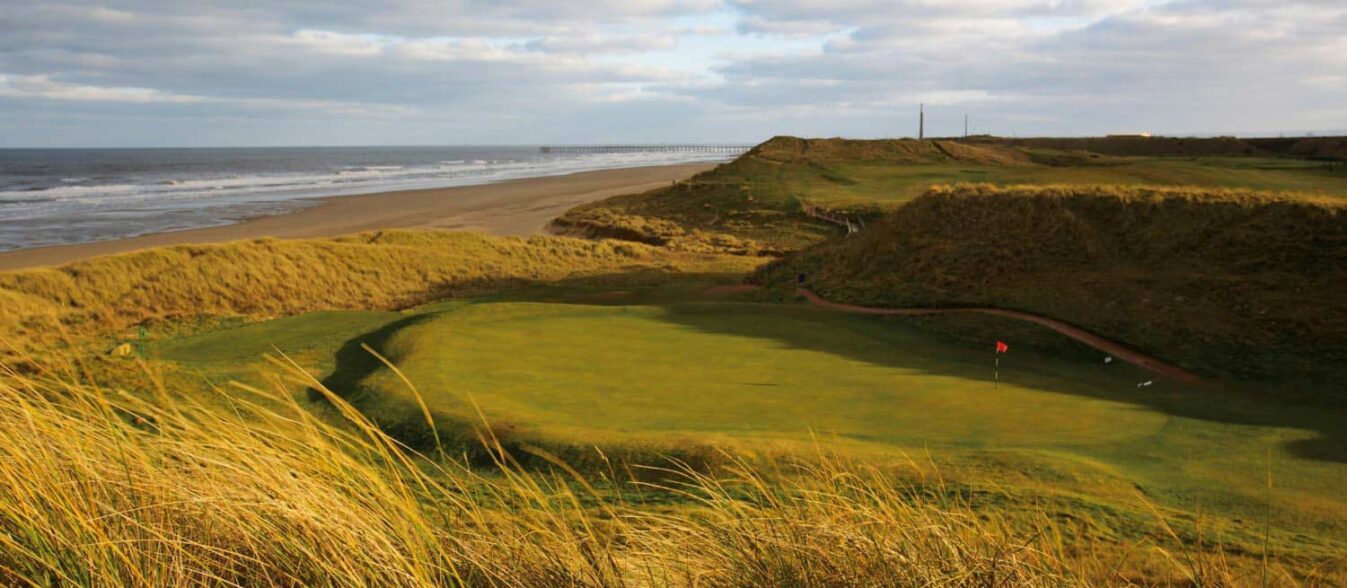
The signature 10th hole, designed by James Braid, is played towards the sea and measures 363 yards from the back tee. Rough left and a row of bunkers to the right flank the narrow fairway, before the hole falls steeply out of view to a vast green set between two dunes with the beach and North Sea beyond.
Back-to-back par threes follow. At the uphill, 211-yard 11th, players must make it to the correct portion of a P-shaped green wrapped around a single pot bunker.
The slightly shorter 12th is played from another elevated tee affording fantastic views. The contouring and bunkers – one large trap short and another smaller one cut into a mound left of the green – ensure those who miss the target will have a tough second shot. A steep rise in the centre of the green makes long putts hard to get right.
A good birdie chance when played sensibly, the 306-yard 13th slopes from left to right and requires a solid tee shot to open up a bowl-shaped green which is defended by steep slopes short, thick rough beyond, and a single bunker on its right side.
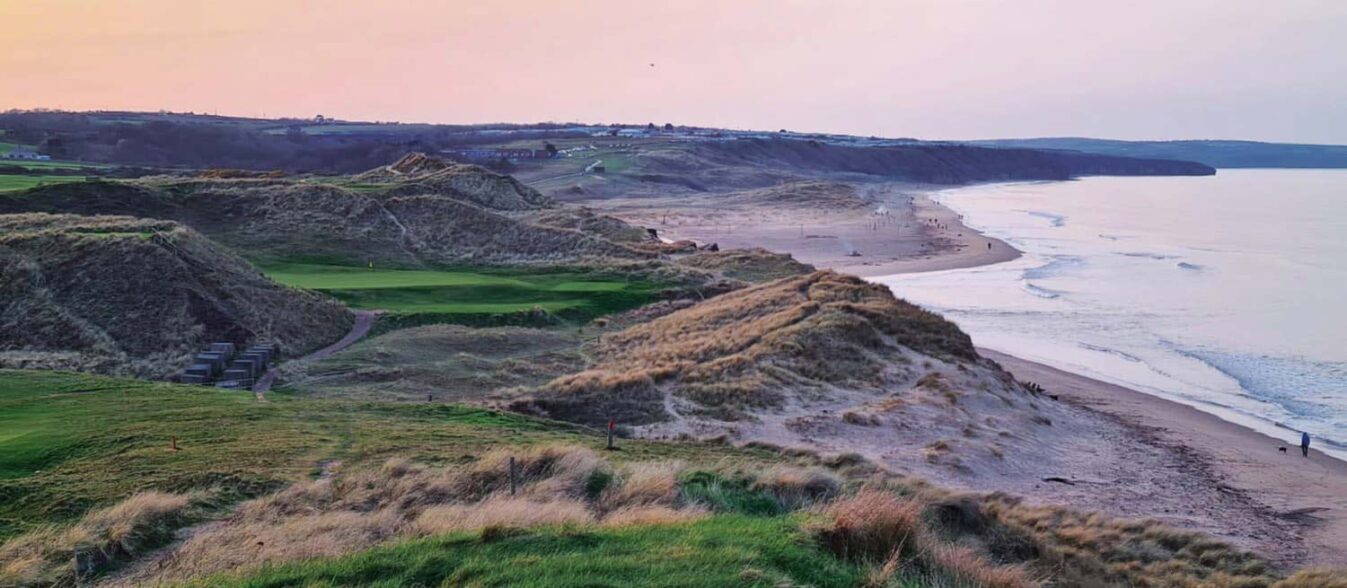
At the 416-yard 14th, the tee shot must be hit confidently with the sea to your left. The hole turns left to a bunkerless green that is framed by the dunes.
At the slightly shorter 15th, a devilishly bunkered route to a green awaits – with the putting surface encircled by six more traps.
The 419-yard 16th is no pushover either. A long tee shot must be followed by an accurate approach as the hole turns slightly left. Two bunkers to the left of the green and one more to the right guard the front half of a large putting surface set at the foot of the dunes.
The 513-yard 17th follows, and this one can yield a late birdie – though you’ll need to be accurate from tee to green with numerous bunkers flanking the fairway. Having turned to the right, those looking for birdies must be incredibly accurate and find the right portion of one of the most severely sloped greens on the course.
Play confidently into the fairway at the par four 18th, which is easier said than done with the boundary left, and you’ll be left with a tricky final approach which must make it past a bunker set above the green and well short on the right while not catching too much of the slope and veering off to the left. Another bunker is hidden from view on the right of the enormous putting surface.
OUR VERDICT
A fantastic example of English links golf with many memorable shots in every round – put Hartlepool on your must-visit list.

