


Join us for a round at High Gosforth Park Golf Club
Newcastle is blessed for golf. Encircled by a mix of golf courses – from traditional clubs to modern venues – you do not have to venture far from the centre of the city to find a fun day out on the golf course.
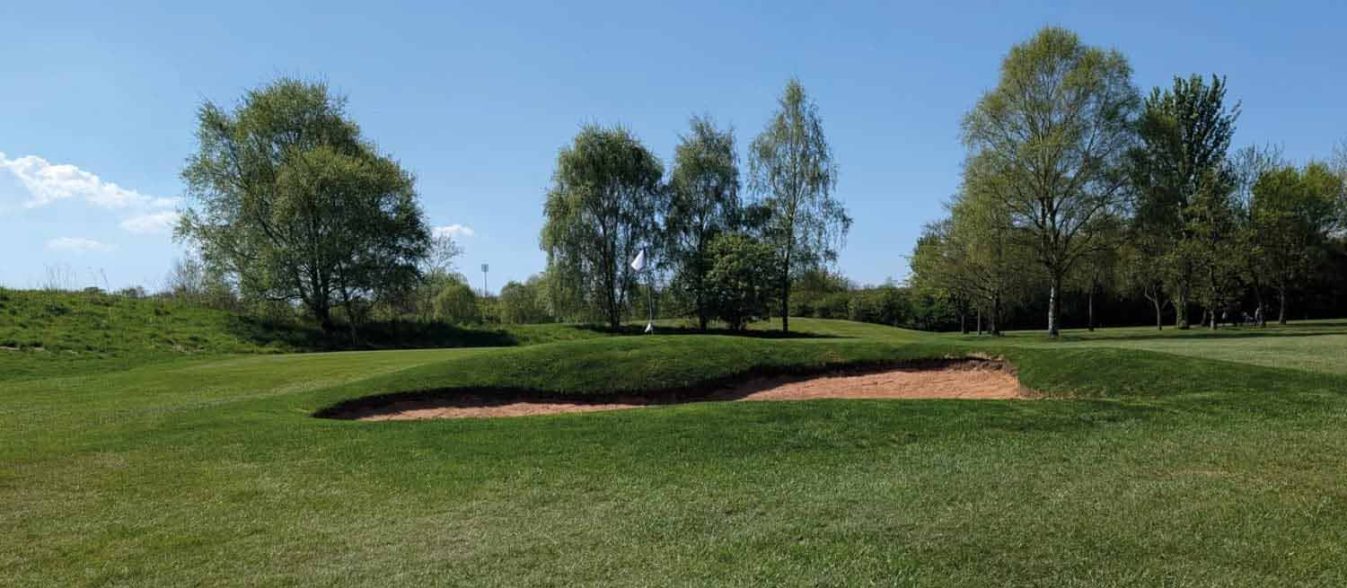
Heading north, just a minute off the A1, you’ll find High Gosforth Park Golf Club. A club and golf course which has undergone great change since it was founded, today it benefits from continued investment – including a recent and extensive bunker remodelling programme – and is a thriving hub of golf activity.
Located within Gosforth Park, it was first known as John Jacobs Golf Centre when the driving range opened in 1966, then Wideopen Golf Club when the first nine holes opened in 1971. The club was then given to Gosforth Park Golfing Complex in 1986, who renamed it Parklands. Run by Arena Racing Company (formerly Northern Racing) since 2001, in 2023 it became High Gosforth Park Golf Club. While its location has not changed over this time, its presentation and appeal to a wide range of golfers has developed a great deal.
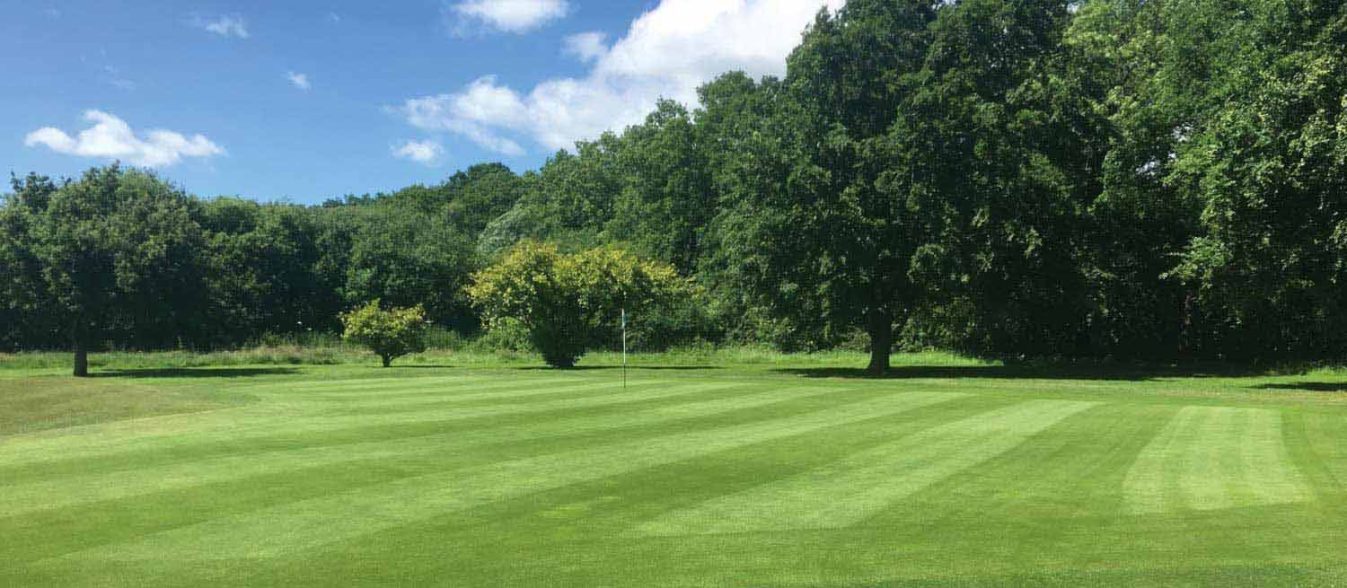
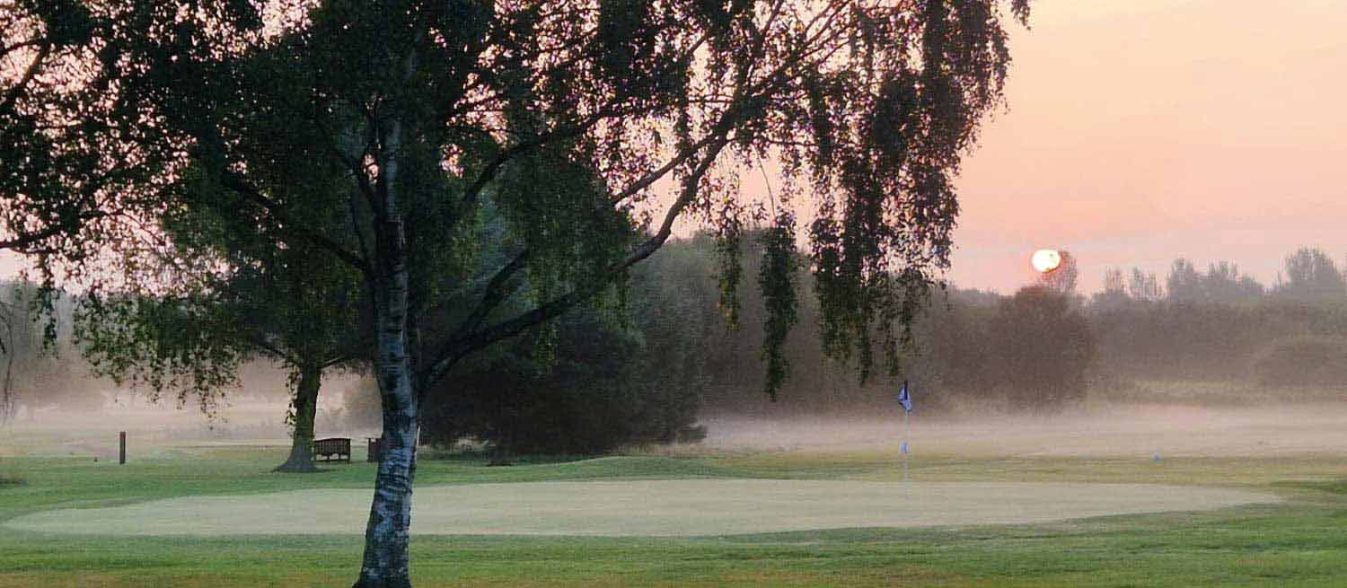
A layout which has all the hallmarks of traditional English parkland design, the course measures 6,074 yards from the back tees with a par of 71 (5,586 yards with a par of 73 from the red tees) and is easy to walk. Bordered by woods, the trees which are in play on the course are well-placed to challenge players, while the modern bunkering protects the greensites and water comes into play to toughen several holes.
The 303-yard first hole requires a long-iron or fairway wood played to the widest part of the fairway, avoiding two bunkers and the out of bounds left, to leave a wedge shot to a large green which is set beyond a deep front bunker. A second greenside trap guards the right side.
The tee shot at the slightly longer second hole, which will be extended slightly further this season with the construction of a new tee box, is one of the toughest on the front nine. A carry of some 230 yards over water, with out of bounds bordering the right side, is required to reach the second part of the fairway. From the landing area, which has a single bunker on its left side, a short-iron or wedge is all that’s required to a small green with a pair of front bunkers.
A short and narrow par four, the third measures just 297 yards from the back tee. Bunkers and trees guard the right side, and while the approach shot is short, it must be accurate when the pin is forward as two bunkers guard the entrance to the green. Back flags on this long, back to front sloping green are much easier to attack.
The 356-yard fourth hole features out of bounds left of a generous fairway. The landing area is narrowed slightly as the trees move in, and a ditch abruptly cuts across the fairway some 75 yards from the green. Two deep bunkers flank a wide, distinctly undulating putting surface.
The fifth and sixth holes require long, accurate tee shots. Measuring 375 and 383 yards respectively, there is room to hit driver on both holes.
At the slightly uphill fifth, a good tee shot is required to leave as short an approach as possible to a vast but well-defended green featuring a centreline bunker as well as two more traps on the front corners of the putting surface.
At the sweeping right to left dogleg sixth hole, a tee shot favouring the right side is needed to get a look at one of the trickiest greens on the course. Raised above the fairway, the heavily contoured green slopes back towards players and runs away on all sides – including down towards the two bunkers set well below the putting surface.
The first par five presents a great birdie opportunity. The 482-yard seventh is protected by out of bounds left with two fairway bunkers on the right of the landing area positioned to catch those who play away from the boundary. The fairway is generous, though it is cut in two by a ditch some 160 yards from the green. A bunker on the right side can catch out those who lay up, while more sand en route to the green is positioned to stop balls bouncing into a generous target from wide angles.
The eighth is a tricky par three of just 160 yards. The out of bounds is very close to the left side of the fairly large green, and bunkers are well-positioned on the front left corner and right side to catch players out. Steer clear of the bunker over the back as it is particularly tricky to get up and down from here, especially when the flag is at the back.
The par five ninth, which measures 520 yards, presents another birdie opportunity when played accurately. A long drive which finds the wide fairway, which features a pair of bunkers, will be rewarded with a chance to reach the green in two, while anything left is in trouble. A bunker sits some 100 yards from the green on the right side, while a larger trap is positioned 10 yards short of the green on the left. More sand protects the right side of the back to front sloping green.
At the 465-yard par four 10th, widely regarded as the toughest hole on the back nine, some will struggle to reach the green in regulation. The fairway sweeps from left to right around the trees and a pair of bunkers can catch out players who stray over to the right side. The trees narrow the route to the green, and finding this large green in regulation requires two excellent shots.
The 514-yard 11th is the last, and toughest, of the par fives. Water crosses the fairway some 200 yards from the green, while the landing area narrows between the trees and a single bunker on the left side as you approach one of the most challenging greens on the course. The heavily sloped putting surface features two bunkers – one on the front left corner and another on the right side of a very small green set above the fairway.
The 156-yard par three 12th requires accuracy as the green is tiny, falls away on each edge, and is guarded by bunkers on its flanks.
The 375-yard 13th is a tricky hole to master as much of the landing area is hidden from view by a large mound on the right. A fairway bunker on the corner of the dogleg must be avoided if you’re laying up, while the ditch crossing the fairway well short of the green can catch players out. A tree looms close to the left side of the green and can come into play when the flag is on this side, while a solitary bunker protects the right side of a generous putting surface.
The 161-yard par three 14th is picturesque and tough. The raised green sits at the top of its own hill with deep bunkers cut into the slopes. Ending up in these bunkers will leave a very tough up and down, while any shot which misses the green will bound away and leave an uphill pitch to the tabletop green. Missing right must be avoided in firm conditions as water waits at the bottom of the slope.
Heading for home, three sub-350-yard par fours will test your accuracy.
The 15th is the shortest of the trio and can yield a birdie opportunity if you find the fairway left of the bunker some 80 yards from the green. The green is elevated with a false front and slopes leading down towards a vast bunker on its left side and a smaller bunker on the right.
At the 343-yard 16th, you must choose whether to play short of the water some 150 yards out from the green or take on the carry over it. Framed by mounding and trees, the route to the incredibly long green is well-defended with a bunker some 10 yards short on the right side, a trap front left, and another thin strip of sand on the right.
The 346-yard 17th is the trickiest of the trio. There is out of bounds left, three fairway bunkers in the ideal landing area, and thick rough and trees right. The green, set beyond two deep bunkers, is generous and slopes from back to front.
The toughest of the par threes at High Gosforth Park, the 198-yard 18th requires an accurate long-iron to the heart of a wide green guarded by trees on the right side and a pair of bunkers on the front corners.
OUR VERDICT
A fun course which can yield a good score when you drive the ball well, there is so much to enjoy every time you play here.

